
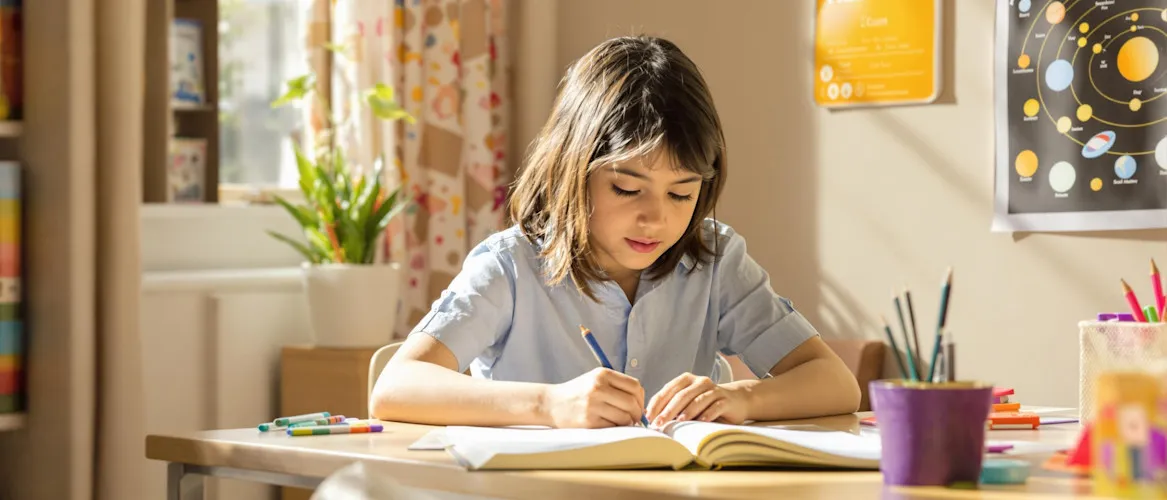
The decision to homeschool rarely comes with a clear instruction manual. Most families know they want something different for their child but quickly run into a wall of questions about what the law requires, what they need to teach, how to register, and what happens if they get it wrong.
Florida is one of the more accessible states for families starting out in homeschooling. The legal framework is flexible, the requirements are clearly defined, and the state actively supports parental choice in education. According to the Florida Department of Education’s 2023-24 Home Education Annual Report, 155,532 students across 114,239 families participated in home education programs in Florida that school year.
The question most families wrestle with after making the choice is where to begin. Finding clear guidance on homeschooling in Florida means understanding what the law requires, what is left entirely to the family’s discretion, and how to build a sustainable structure from day one. This guide walks through exactly that.
Understanding Florida’s Home Education Law
Florida’s home education law is laid out primarily under Section 1002.41 of the Florida Statutes. It is worth understanding because it sets the boundary of what the state requires from families and, just as importantly, what it does not require.
Florida does not require a specific curriculum. It does not mandate that parents hold a teaching license or meet any educational credential requirements themselves. It does not require families to follow a set school schedule or teach subjects in any particular sequence. This gives Florida families significantly more flexibility than families in many other states.
What Florida does require is straightforward. Families must file a Letter of Intent with their local school district superintendent within 30 days of beginning a home education program. After that, they must maintain a portfolio of educational records and student work throughout the year. Finally, they must arrange for an annual academic evaluation of their child using one of five approved methods.
These three requirements form the backbone of Florida’s home education framework. Getting each one right from the start prevents the problems that tend to catch new families off guard mid-year.
Filing Your Letter of Intent
The Letter of Intent is the formal beginning of a home education program in Florida. It does not require approval from the district. It is a notification, not a request for permission. The parent notifies the superintendent of their school district that they are establishing a home education program for their child, and the district acknowledges it.
The letter needs to include basic information: the parent’s name and address, and the name and grade equivalent of the child being homeschooled. Each district in Florida has a home education contact who processes these notifications and can answer questions about the local process. Some districts make this simple with an online submission form. Others still use paper.
Filing the Letter of Intent on time matters. Florida law requires it to be submitted within 30 days of beginning home education and within 30 days of the start of each new school year for families who are continuing. Missing this window does not end a family’s ability to homeschool, but it creates an unnecessary compliance gap that is easy to avoid.
Maintaining a Portfolio Throughout the Year
The portfolio requirement is the most ongoing obligation Florida homeschooling families carry. A portfolio is not a formal report or a graded set of assignments. It is a collection of materials that documents what the child is learning and working on throughout the year.
Florida law requires the portfolio to contain a log of educational activities and samples of the child’s work. These can include written work, art projects, science observations, math worksheets, reading logs, field trip notes, or any other materials that reflect the child’s educational experience. The portfolio must be maintained for at least two years and must be made available to the school district if the superintendent requests to review it in writing.
According to the Florida DOE’s Home Education Annual Report, home education enrollment in Florida grew from 106,115 students in 2019-20 to 155,532 in 2023-24, a growth of nearly 47% in five years. With more families entering the system each year, districts are increasingly familiar with homeschooling families and portfolios, but the quality and organization of what families maintain still matters when a review is requested.
Practically speaking, building portfolio habits from the beginning of the school year is far easier than reconstructing a year’s worth of materials in June. Many Florida families keep a simple folder or binder, adding samples monthly. Others use digital tools to photograph and organize work. The method matters less than the consistency.
The Five Annual Evaluation Options
At the end of each school year, Florida requires parents to have their home-educated child evaluated academically. This is where many new families feel uncertain, but the options Florida provides are genuinely flexible and accommodate different family situations and philosophies.
The five approved evaluation methods are:
- A nationally normed standardized test, administered by a certified teacher
- An evaluation by a Florida certified teacher who observes the child and reviews the portfolio
- A state student assessment test used by the school districts
- A documented evaluation by a psychologist licensed under Florida law
- An evaluation by a certified teacher using an approved evaluation form
For most families starting out, the two most commonly used options are standardized testing and portfolio evaluation by a certified teacher. Portfolio evaluations are particularly popular because they allow a family’s year of work to be assessed holistically rather than through a single test. Many Florida homeschooling support organizations can connect families with certified evaluators who specialize in home education assessments.
The results of the evaluation must be submitted to the school district superintendent annually. This submission closes out the school year’s formal requirements and begins the cycle again.
Curriculum Freedom and What It Means in Practice
Florida’s curriculum freedom is one of the most significant advantages of homeschooling in this state. There is no prescribed list of materials families must use, no required textbook series, and no mandated scope and sequence. This means families can choose a structured curriculum program, build their own approach from individual resources, or use a combination of both.
This freedom is genuinely powerful but can also feel overwhelming for families who are used to a school setting where those decisions are made for them. A few practical principles help new families make good choices.
First, choosing a curriculum should start with the child, not the program. A child who learns best through hands-on activities and movement will not thrive in a curriculum built around long daily reading assignments, no matter how academically strong that curriculum is. The fit between how a child learns and how a program teaches matters more than rankings or reviews.
Second, new families often overestimate how much material they can cover in a year. A common mistake is purchasing a comprehensive package for multiple subjects and then burning out by November because the daily workload is unsustainable. Starting with core subjects and adding others gradually is a more sustainable approach.
Third, Florida’s flexibility means families can also access public resources. Home-educated students in Florida have the right to participate in interscholastic extracurricular activities at their local public school, access dual enrollment at community colleges, and use Florida Virtual School courses. These options expand what is available to homeschooled children without requiring families to change their approach to home instruction.
Connecting With Florida’s Homeschooling Community
One of the most practical things a new Florida homeschooling family can do is connect with the community that already exists. Florida has a well-established homeschooling infrastructure built by decades of families navigating the same system. This includes statewide organizations, district-level co-ops, curriculum fairs, support groups, and online communities organized by region and philosophy.
The Florida Parent-Educators Association is one of the oldest and largest homeschooling organizations in the state and hosts an annual convention that draws thousands of families each year. The Florida Home School Association and Sunshine State Homeschoolers are other organizations that provide support specifically for Florida families. These groups are worth knowing about because they are sources of vetted, Florida-specific guidance that generic resources cannot provide.
Local co-ops are particularly valuable for families with young children. They provide structured group learning experiences, social connections for children, and a practical division of teaching responsibilities among parents. Most Florida communities have at least one active co-op, and many have several organized around different philosophical approaches.
What to Expect in the First Year
The first year of homeschooling in Florida almost always feels different from what families imagined. The adjustment period is real. Children who have been in traditional school settings take time to decompress and shift into a different kind of learning. Parents take time to find their rhythm as educators and to learn what works for their specific child.
Most experienced Florida homeschooling families give the same advice to those just starting: give it time before you evaluate whether it is working. The first semester is rarely representative of what homeschooling can become by the second or third year. Building the portfolio habit, understanding the evaluation process, and finding a curriculum rhythm are skills that develop with experience.
Taking the First Step
Florida’s home education law gives families a clear and manageable path. File the Letter of Intent, maintain the portfolio, and complete the annual evaluation. Everything else, including curriculum, schedule, subjects, and teaching approach, is genuinely in the family’s hands.
For families doing this for the first time, homeschooling in Florida is an achievable and well-supported choice. The community is large, the law is clear, and the flexibility available to Florida parents makes it possible to build an education that fits the child rather than requiring the child to fit a system.
